
編譯|李言
Science, 26 JUL 2024, Volume 385 Issue 6707
《科學》2024年7月26日,第385卷,6707期
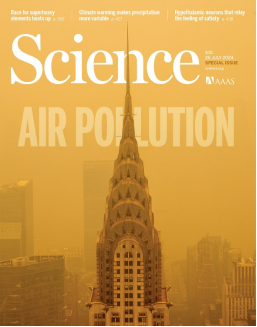
量子計算Quantum Computing
Operating semiconductor quantum processors with hopping spins
通過跳頻自旋操控半導體量子處理器
▲ 作者:CHIEN-AN WANG, VALENTIN JOHN et al.
▲鏈接:
https://www.science.org/doi/10.1126/science.ado5915
▲摘要:
在此,我們展示了通過設計具有位點依賴自旋量子化軸的量子點之間的自旋跳,可以用離散信號建立量子控制。我們展示了基于跳躍的量子邏輯,并獲得了99.97%的單量子位門保真度,每跳99.992%的相干穿梭保真度和99.3%的雙量子位門保真度,對應已經預測的允許量子糾錯的錯誤率。
我們還通過統計映射10量子點系統的相干性,證明跳變自旋構成了一種調諧方法。我們的研究結果表明,分散布置的密集量子點陣列可以用于高效和高連接的量子比特寄存器。
▲ Abstract:
Here, we show that by engineering the hopping of spins between quantum dots with a site-dependent spin quantization axis, quantum control can be established with discrete signals. We demonstrate hopping-based quantum logic and obtain single-qubit gate fidelities of 99.97%, coherent shuttling fidelities of 99.992% per hop, and a two-qubit gate fidelity of 99.3%, corresponding to error rates that have been predicted to allow for quantum error correction. We also show that hopping spins constitute a tuning method by statistically mapping the coherence of a 10–quantum dot system. Our results show that dense quantum dot arrays with sparse occupation could be developed for efficient and high-connectivity qubit registers.
化學Chemistry
The sugar cube: Network control and emergence in stereoediting reactions
己糖立方:立體編輯反應中的網絡控制和涌現
▲ 作者:HAYDEN M. CARDER, GINO OCCHIALINI et al.
▲鏈接:
https://www.science.org/doi/10.1126/science.adp2447
▲摘要:
在此我們提出“網絡控制”,這是一種對比范例,可以利用速率常數之間隱藏的相互作用放大適度的內在偏差,并實現精確的多站點編輯。
當網絡控制應用于己糖的光化學異構化時,可以選擇性地獲得八種可能的非對映體中的六種。放大效應可以看作是介于簡單化學系統的動力學控制和復雜生物系統的代謝調節之間的一種中尺度現象。
▲ Abstract:
We propose “network control,” a contrasting paradigm that exploits hidden interactions between rate constants to greatly amplify modest intrinsic biases and enable precise multisite editing. When network control is applied to the photochemical isomerization of hexoses, six of the eight possible diastereomers can be selectively obtained. The amplification effect can be viewed as a mesoscale phenomenon between the limiting regimes of kinetic control in simple chemical systems and metabolic regulation in complex biological systems.
材料科學Material Sciences
Borrowed dislocations for ductility in ceramics
借位錯實現陶瓷拉伸塑性變形
▲ 作者:L. R. DONG, J. ZHANG et al.
▲鏈接:
https://www.science.org/doi/10.1126/science.adp0559
▲摘要:
在此,我們提出了一種“借位錯”的策略,該策略使用具有有序化學鍵的共格界面。這種方法使陶瓷通過界面調動大量來自金屬的位錯,大大提高了陶瓷的拉伸延展性,從而克服了陶瓷內部直接位錯成核的挑戰。這種策略為提高陶瓷的拉伸延展性提供了新方法。
▲ Abstract:
Here, we propose a “borrowing-dislocations” strategy that uses a tailored interfacial structure with well-ordered bonds. Such an approach enables ceramics to have greatly improved tensile ductility by mobilizing a considerable number of dislocations in ceramic borrowed from metal through the interface, thereby overcoming the challenge associated with direct dislocation nucleation within ceramics. This strategy provides a way to enhance tensile ductility in ceramics.
地球科學Earth Science
Fault size–dependent fracture energy explains multiscale seismicity and cascading earthquakes
斷層大小相關的斷裂能解釋多尺度地震活動性和級聯地震
▲ 作者:ALICE-AGNES GABRIEL, DMITRY I. GARAGASH et al.
▲鏈接:
https://www.science.org/doi/10.1126/science.adj9587
▲摘要:
我們認為,小地震和大地震的斷裂過程是完全不同的。我們將地震觀測與基于物理的地震模型相結合,發現在小地震的能量收支中,動力減弱和再強化效應都是不可忽視的。
我們建立了斷裂能與斷層大小的線性標度關系,以及斷裂標度與滑動的線性標度關系。通過超級計算,我們應用這種尺度揭示了斷層損傷區內涉及超過700個多尺度裂縫的大型動態破裂地震級聯。我們為地震活動性提供了一個簡單的解釋,這對理解地震成因和多斷層破裂級聯具有重要意義。
▲ Abstract:
We propose that fundamentally different fracture processes govern small and large earthquakes. We combined seismological observations with physics-based earthquake models, finding that both dynamic weakening and restrengthening effects are non-negligible in the energy budget of small earthquakes. We established a linear scaling relationship between fracture energy and fault size and a break in scaling with slip. We applied this scaling using supercomputing and unveiled large dynamic rupture earthquake cascades involving >700 multiscale fractures within a fault damage zone. We provide a simple explanation for seismicity across all scales with implications for comprehending earthquake genesis and multifault rupture cascades.
Anthropogenic amplification of precipitation variability over the past century
人類活動導致過去百年來全球降水變率增強
▲ 作者:WENXIA ZHANG, TIANJUN ZHOU, AND PEILI WU
▲鏈接:
https://www.science.org/doi/10.1126/science.adp0212
▲摘要:
在此,我們表明在過去的一個世紀里,由于人為變暖累積,全球(超75%的陸地面積)降水變率已經增長。從每日到季節的時間尺度范圍都可以看到變率的增加,全球日變率每10年增加1.2%,在歐洲、澳大利亞和北美東部尤為突出。
降水變率的增加主要是由與大氣濕潤有關的熱力學驅動的,在年代際尺度上受環流變化的調節。這對天氣和氣候預測以及社會和生態系統的復原力和適應能力提出了新的挑戰。
▲ Abstract:
Here we show that precipitation variability has already grown globally (over 75% of land area) over the past century, as a result of accumulated anthropogenic warming. The increased variability is seen across daily to intraseasonal timescales, with daily variability increased by 1.2% per 10 years globally, and is particularly prominent over Europe, Australia, and eastern North America. Increased precipitation variability is driven mainly by thermodynamics linked to atmospheric moistening, modulated at decadal timescales by circulation changes. Amplified precipitation variability poses new challenges for weather and climate predictions, as well as for resilience and adaptation by societies and ecosystems.
生物學Biology
Neurons for infant social behaviors in the mouse zona incerta
小鼠未定帶中負責幼兒社會行為的神經元
幼鼠無動帶社會行為的神經元
▲ 作者:YUEXUAN LI, ZHONG-WU LIU et al.
▲鏈接:
https://www.science.org/doi/10.1126/science.adk7411
▲摘要:
了解嬰兒社會行為的神經基礎對于闡明早期社會和情感發展的機制至關重要。在這項研究中,我們報告在斷奶前小鼠的未定帶(ZISST)中表達生長抑素的特定神經元群,這些神經元對社會互動做出動態反應,特別是與母親的互動。
在幼鼠中進行的雙向神經活動操作表明,斷奶前的ZISST神經元與感覺、情緒和認知腦中心的廣泛連接介導了與母親存在相關的兩個關鍵適應功能:減少行為困擾和促進學習。這些發現揭示了幼鼠大腦中的協調與母親的關系對幼鼠行為和生理的積極影響的神經元。
▲ Abstract:
Understanding the neural basis of infant social behaviors is crucial for elucidating the mechanisms of early social and emotional development. In this work, we report a specific population of somatostatin-expressing neurons in the zona incerta (ZISST) of preweaning mice that responds dynamically to social interactions, particularly those with their mother. Bidirectional neural activity manipulations in pups revealed that widespread connectivity of preweaning ZISST neurons to sensory, emotional, and cognitive brain centers mediates two key adaptive functions associated with maternal presence: the reduction of behavior distress and the facilitation of learning. These findings reveal a population of neurons in the infant mouse brain that coordinate the positive effects of the relationship with the mother on an infant’s behavior and physiology.
編譯|未玖Nature,5December2024,Volume636,Issue8041《自然》2024年12月5日,第636卷,8041期天文學AstronomyInsituspheroidfor......
編譯|馮維維Science, VOLUME385,ISSUE6715,20SEP2024《科學》第385卷,6715期,2024年9月20日物理學PhysicsSqueezingthequa......
編譯|李言Nature,19September2024,Volume633Issue8030《自然》,2024年9月19日,第633卷,8030期化學ChemistryGrowthofcomplete......
編譯|李言Science,6SEP2024,Volume385Issue6713《科學》2024年9月6日,第385卷,6713期物理學PhysicsAchievingopticaltranspare......
編譯|未玖Nature, 5September2024,Volume633,Issue8028《自然》2024年9月5日,第633卷,8028期天文學AstronomyGravitation......
編譯|李言Nature,29August2024,Volume632Issue8027《自然》2024年8月29日,第632卷,8027期地球科學EarthScienceEarth’sambipola......
編譯|馮維維Science,VOLUME385,ISSUE6709,9AUG2024《科學》,第385卷,6709期,2024年8月9日生命科學LifeScience Engineeredd......
編譯|李言Science,26JUL2024,Volume385Issue6707《科學》2024年7月26日,第385卷,6707期量子計算QuantumComputingOperatingsemi......
編譯|未玖Nature, 25July2024,VOL631,ISSUE8022《自然》2024年7月25日,第631卷,8022期材料科學MaterialsSciencePlasticit......
Nature,18July2024,Volume631Issue8021《自然》2024年7月18日,第631卷,8021期材料科學MaterialsScienceElectronholography......