
發件人: Transmissome
日期: Saturday, January 23, 2021 at 6:04 PM
至: xxxcashq.ac.cn
主題: 解決張曙光與裴鋼實驗結果矛盾的方法是第三方重復實驗
中國科學院道德建設辦公室,
謝謝中國科學院道德建設委員會接受舉報。
需要說明,其實每一步我都是被動的。有人向基金委舉報我,2019年基金委致函我新到的工作單位,蓄意造成不良影響,我不得不回復基金委,在初稿上列舉了裴鋼。而裴鋼在上海法庭起訴我。現在,裴鋼有預謀地協調張曙光公開對我進行人身攻擊。我只好公開我的回復。
在此補充舉報材料:美國麻省理工學院(MIT)的張曙光博士提供的,他實驗室的有關GPCR的最新論文(Qing et al., 2020)。該文圖5所示,截短的(非七重跨膜)受體不能介導25nM配體引起的細胞內鈣濃度升高。而“凌堃-裴鋼”論文(Ling et al., 1999)的圖3D聲稱五重跨膜受體可以與全長的正常受體一樣介導10nM的配體引起的細胞內鈣濃度升高。這兩種結果截然相反。
既然張曙光非常強烈地認為他的實驗等同于“凌堃-裴鋼”,那么張曙光等于在事實上支持舉報裴鋼,無論張曙光口頭上怎么說。也就是:事實勝于雄辯,雖然張曙光出面口頭上說重復了裴鋼結果,張曙光文章的圖片和文字實際顯示的結果與裴鋼的結果相互矛盾。
解決張曙光與裴鋼實際矛盾最有效的方法,是請有公信力的第三方來進行重復實驗。
附五點注意:
1)被舉報論文的第一作者中文姓名為凌堃,所以這篇論文簡稱應該為“凌堃-裴鋼”;
2)請注意張曙光博士投寄的信件,和我的分析,現在成為要求重復“凌堃-裴鋼”的新理由。
張曙光聲稱他實驗室于一個月前發表的論文重復了“凌堃-裴鋼”的實驗,而且得到了驗證“凌堃-裴鋼”的結果。
本郵件下面轉的是我的分析和給張曙光博士的回復:張曙光博士的論文如果可信,它正好否定了“凌堃-裴鋼”的結果,也就是它不能重復“凌堃-裴鋼”的結果。
但是,正如我對張曙光的回復,嚴格地說,張曙光的實驗沒有嚴謹地用同樣的蛋白質分子,所以并未嚴格重復“凌堃-裴鋼”的實驗。
為了否定張曙光對裴鋼實驗室的高級黑,給予裴鋼實驗室澄清的機會,可以由裴鋼實驗再次重復實驗、希望得到結果否定張曙光。
因為張曙光否定“凌堃-裴鋼”的出現,現在,就更有意義搞清楚“凌堃-裴鋼”的結果能否被重復。
張曙光已自我顯示既不是有公信力的第三方,也不是最值得學習的最嚴謹的科學家;
3)請轉告和提醒中國科學院以及中國科學院道德建設委員會和辦公室,我舉報的是裴鋼個人,不是中國科學院,也不是中國科學院道德建設委員會、更不是辦公室。
因此,裴鋼不能公器私用,不能用科學院的資源為他個人服務。
科學院、或科學院道德建設委員會或辦公室更不能幫助裴鋼、不能捍衛裴鋼。科學院是我們國家的科學院,不是裴鋼個人的。裴鋼如果有問題,科學院應該批評而不是捍衛。
現在,應該裴鋼是一方,張曙光是一方,我是一方,科學院應該超然公正。
進行這一提醒,也是因為發生了一件不容易理解的事情。在昨天(1月22日)張曙光給我英文電子郵件不久,科學院主管的新聞網站,突然出現張曙光郵件的中文譯件,而且同時在同一新聞中刊登了凌堃等相關人的文章。這封信的中文和凌堃等中文文章都沒有在其他地方先出現過。我希望這不是有人通過科學院公家的網站,協調了對我的攻擊。
裴鋼、張曙光、凌堃等都只能個人出面,用個人微信或其他自媒體,而不能用科學院的國家資源。
如果科學院任何層面為一方提供資源,就會喪失公信力。任何這樣的行為,是讓科學院變成個人的工具,應該是科學院全體院士、全體員工不愿意看見的。也不應該是我們國家所允許的。
4)科學院道德建設委員會應該嚴格地,按合理程序進行調查。調查小組應該獨立于裴鋼,由與裴鋼沒有利益沖突(包括利益相關)的人組成。調查小組應該召見裴鋼及其論文的作者,也應該召見我,聽取雙方的陳述。可以雙方同時到,進行對質。
因為有張曙光對裴鋼的實際否定,應該允許裴鋼實驗室進行重復實驗,否定張曙光對裴鋼結果的否定(否定之否定)。
應該請有公信力的第三方進行重復實驗,在嚴謹態度指導下,經過嚴格的檢驗,過硬的分析,得到結果。可以再度聽取專家意見,得出令人信服的結論:“凌堃-裴鋼”的結果到底能否重復。
如果“凌堃-裴鋼”的結果能夠重復,因為饒毅舉報公開而長久的發表意見,雖然他有權利舉報,但調查發現“凌堃-裴鋼”的能夠重復就讓饒毅尷尬,說明他判斷失誤。道德委員會不能要求舉報人向被舉報人道歉,特別是饒毅不僅有邏輯而且其舉報很快得到張曙光提供論文所含結果的實際支持。但是,如果饒毅對自己是有要求的,饒毅應該自覺地向裴鋼公開道歉。這將是饒毅人生的里程碑,公開在眾目睽睽之下道歉。
如果“凌堃-裴鋼”的結果不能被重復,應該按國際慣例,由裴鋼致信《美國科學院院刊》,表示“凌堃-裴鋼”的結果不能重復,需要撤銷已經發表的原文。這將是中國科學院道德建設委員會的重大成績:為我國建立了知錯必改的范例。也是裴鋼人生的里程碑,公開顯示自己接受客觀事實。
遲到的公正,比永遠不到的公正,有本質差別。
如果“凌堃-裴鋼”的結果不能被重復,可以考慮進一步調查是否造假。應該收集人證物證,例如要求裴鋼實驗室出示研究記錄,要求裴鋼方顯示他已經承認的第二篇(但沒有發表的)三重、一次跨膜蛋白的論文,聽取第一作者和做過這一實驗的其他裴鋼實驗室人員,等等。應該聽取多個GPCR專家的意見,可以線上聽取國際專家(包括諾貝爾獎獲得者)的意見。
因為時代久遠,是否造假、誰造假,不一定容易調查。但這一調查的困難,不應該影響對科學事實的調查和判斷。也就是說,確定“凌堃-裴鋼”實驗結果是否能夠重復,是切實可行的,對科學有重大意義,不能忽略。加上張曙光的新爭議,就更難以繞過去。
5)道德建設委員會不僅應該有公正的程序,而且應該公布其程序,更應該公布重復實驗的結果、分析和結論。整個過程不僅應該切實做到公平公正,而且應該讓大家看見公平公正。讓中國科學院道德建設成為我國的楷模。
饒毅
2021年1月23日
附件1《饒毅給張曙光的回信》
附件2 《張曙光2020年12月論文》
附件3《張曙光出示的科學界對他論文的祝賀信》
附件4《凌堃-裴鋼1999年論文》
發件人: Transmissome
日期: Saturday, January 23, 2021 at 6:00 PM
至: Shuguang Zhang,Gang Pei
抄送:
主題: Re: A letter to Dr. Rao Yi concerning your extremely careless accusation of Dr. 裴鋼 and colleagues' 1999 PNAS paper without familiarity with the literature
張博士,
(按您拷貝的地址同時給:歐陽鐘燦、翟明國兩位副主任,您拉上的楊煥明,以及強伯勤老師、白春禮院長,和曹京華局長。在此也拷貝裴鋼主任)
1月22日是周五,到晚上才有時間用計算機看您的email,當天下午在手機上沒注意到您的email有附件,所以問您要了文獻,導致您兩度寄文獻,非常感謝。
因為顯然您讀過我質疑裴鋼實驗室文章的中文,請原諒我在此就不用英文了(如果改變主意,我以后也可以寫一個短一些的英文)。
感謝您寄來貴實驗室2020年12月18日發表在iScience上的文章(以下簡稱“大作”)。
拜讀您的大作后得知:如果按您所說您實驗室就是用同樣蛋白(“identical protein”)重復了凌堃-裴鋼的實驗的話,那么您的結果正好證明凌堃-裴鋼的結果不可重復。
您的來信還想說GPCR需要七重跨膜不是科學界的共識。而您附件科學界給您的賀信,都說您的發現令人驚訝,這些賀信的言論證明GPCR需要七重跨膜確實還是共識。
事實勝于雄辯,不聽您如何說,而看您的論文明確的事實:您的論文實際直接否定裴鋼的論文可以被重復。
我現在非常不清楚:是您想通過出示這些結果來黑裴鋼、還是裴鋼想通過拉您進來而黑您。
但,無論如何,還是謝謝您。以裴鋼的智力程度,我可以想象會出這樣的狀況。而我完全不了解您,就不加評論了。
1)對您來信充滿負面形容詞的慷慨教導,我好意回報三句正面的勉勵:科學要嚴謹、說話要誠實、為人要靠譜。
以后發出指控之前需要冷靜和仔細,要不然拿著一篇iScience文章就當令箭隨意揮舞,可能不僅誤傷友軍,而且有損您的聲譽。
2)您來信堆砌猛烈攻擊我的詞語,如“totally irresponsible, both scientifically and ethically… reckless and extremely damaging ”。
英文“not honorable”是非常重的對于人格的嚴厲批評,我目瞪口呆地看到MIT教授行列有您這樣的人。
您指責我對“凌堃-裴鋼”論文的批評毫無基礎。
在您這樣攻擊我之前,問過我有什么基礎嗎?您怎么知道我沒有事實基礎?
我在此告訴您,在裴鋼文章發表后不是很久以后,他就把他實驗室的相關實驗材料(如constructs,“DNA構建”)寄給過我實驗室。我實驗室的人重復過他實驗室的實驗,但是得不到他們發表的結果,所以早就告訴裴鋼實驗結果不能重復。
您認為:有比這更好的事實基礎嗎?還是您認為不用問就斷定我沒有事實基礎?
裴鋼現在說他不記得我告訴過他,我們不能重復的事實。如果我實驗室沒有做過那些實驗,他為什么不發表第二篇文章?他現在已經承認有第二篇文章了,只是沒有發表。沒有發表的原因是因為我告訴他三重、一次跨膜的GPCR也不能起作用,至少我實驗室不能重復他實驗室的結果。
那時我和裴鋼無冤無仇,他接受了我的意見。(我現在也與他個人無冤無仇,只是在群里批評他,他拒不接受而爭論加碼)。
請問張博士,做過實驗這么強的事實,算不算事實基礎?
2019年11月我的郵件被泄漏后,還有其他實驗室試圖重復“凌堃-裴鋼”論文的結果,但得不到同樣結果。他們不愿意公開,所以我也不能用于公開批評。現在您攻擊我沒有事實依據,我也就在此順便告訴您。
與我素不相識的您,在完全沒有了解事實的基礎上,用負面的英文猛烈攻擊我。試問:我們兩人之間,不honorable的是我、還是您?該公開道歉的,是我還是您?
3)您指責我沒有閱讀文獻就批評。我閱讀文獻的量,隨便不嚴謹地估計一下,可能超過您的十倍,如果不是百倍。我閱讀文獻的歷史有四十年,我父親是教授,最早他帶我到圖書館看科學期刊。后來我自己養成閱讀文獻習慣肯定超過35年。
但是,您并非GPCR的大專家,我沒閱讀您的文獻不算什么罪惡。
您做了多長時間GPCR的研究?我自己實驗室涉及GPCR的文章可能早于您(如二十年前的Nature 410:948-952,2001)(Nature Neuroscience 5:719-720,2002),也許早不少年代?
您的郵件充滿的居高臨下的態度,不可能是依據您研究GPCR科學經歷的長短,也不是您研究GPCR貢獻非凡,不知道是哪里來的?希望不是因為地域歧視,因為您在美國、我在中國?這是一種逆向種族歧視,希望您不是。
4)您提供的您實驗室的論文,是2020年12月發表的。我提出對裴鋼的批評是2019年11月。
您的文章,發表在iScience,您說是《細胞》的子刊。開個玩笑,我在《自然》(1990)和《細胞》(1999)正刊發論文的時候,我也沒有要您讀?(希望MIT的教授有點幽默,玩笑畢)。
我知道《細胞》有一個最差的雜志,Cell Reports,接受《細胞》所有正規刊物拒絕的稿件。我在您的郵件之前,確實不知道《細胞》旗下還有iScience。我的孤陋寡聞,我對您抱歉,不知道還有比Cell Reports更低的《細胞》子刊(哦,也許是更高的子刊)。
但是,大家公認,因為現在學術刊物很多,其中還確實有垃圾刊物(這里沒有說iScience是)。大家共識是不要求必須讀所有刊物的所有文獻。而且實際上,如果刊物太新或太不知名,沒有引用其文章也情有可原。
您是MIT研究員(或教授),當然應該知道國際學術界的常規:在很近的時間內,在不常見刊物上發表的文章,如果沒有被引用,大家并不怪罪。
半開玩笑,與我相關的領域,我沒讀的文章,一般來說,90%是不重要的。我早就不擔心其他人說我少讀了什么,我擔心的是讀多了,把我自己讀成只會鸚鵡學舌而不會獨立研究、獨立思考的人。
5)您跳出來非常奇怪。作為MIT教授,您應該知道,由中國科學院道德建設委員會找您,您可以給它提供材料。
您對人要求高,對自己要想必應該類似?您要我公開道歉,我現在以子之矛攻子之盾,揭示您既污蔑了我,也黑了裴鋼,您準備怎么道歉?
6)我們現在來仔細閱讀您作為通訊作者的大作:Qing R et al. (2020) Non-full-length water-soluble CXCR4QTY and CCR5QTY chemokine receptors: implication for overlooked truncated but functional membrane receptors. iScience 23:101670.
您不肯標記哪些結果、哪些圖重復了凌堃-裴鋼,我只好翻來覆去讀。
您的大作與凌堃-裴鋼論文相關的,是兩個短的突變受體。一個是CCR5的突變SZ190b,一個是CXCR4的突變SZ158a,它們都不是七重跨膜,而是更短。您在圖5研究了它們是否能夠介導信號,以鈣離子內流為標準。大作中圖5這一檢測,相應于凌堃-裴鋼的圖3D。
大作第九頁明確寫道:全長(也就是七重跨膜的)CCR5對濃度為25nM和100nM的配體都有反應(可以看到鈣內流)。而非七重跨膜的短突變SZ190b,對25nM的配體沒有反應,不能介導鈣內流。但是SZ190b可以介導對100nM配體的微弱反應,比全長CCR5介導的反應低很多。另外,如果短的SZ190b與全長的CCR5共同表達在細胞里,SZ190b起抑制全長CCR5的作用。
同頁的文字和圖5E更明確顯示,CXCR4的非七重跨膜短突變種SZ158a,既不能介導對25nM配體的反應,也不能介導對100nM配體的反應。也就是不僅功能下降,實際毫無證據有任何信號傳導功能。
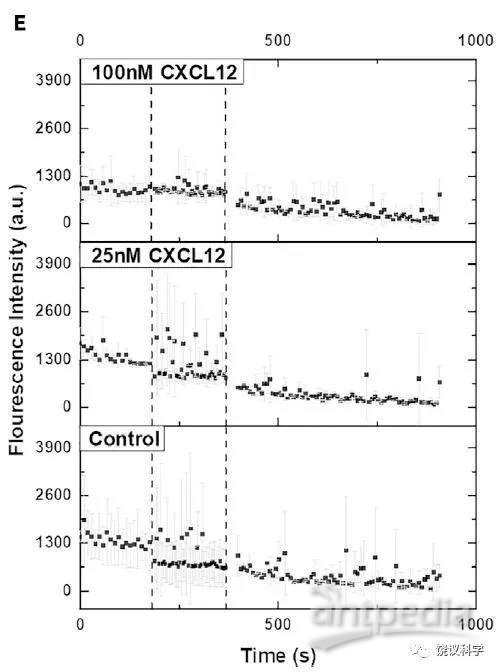
這些結果,如果是確切的,是可信的,是可以與凌堃-裴鋼論文相比的,那么凌堃-裴鋼論文就沒有被重復出來。
請您仔細看凌堃-裴鋼論文的圖3D。他們號稱,10nM的配體作用于五重跨膜CCR5、或五重跨膜CXCR4時,引起的鈣內流與全長CCR5、或全長CXCR4一樣強。
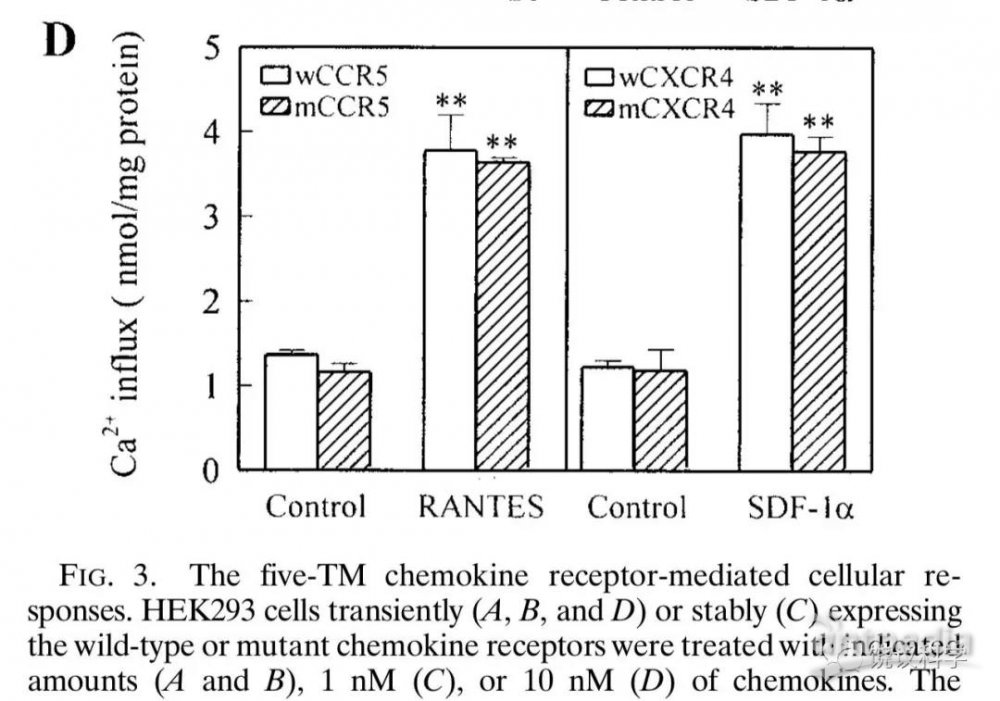
按您自己大作的結果,用非七重跨膜的蛋白,在25nM沒有作用,因此,在10nM就不應該有作用。您證明凌堃-裴鋼論文的結果不看重復。
按大作顯示,非七重跨膜的短受體蛋白,抑制全長的受體蛋白。從凌堃-裴鋼論文中短受體與全長受體作用相同,就不可能觀察到抑制作用。大作這一結果,也否定凌堃-裴鋼論文的結果,至少與凌堃-裴鋼論文的自然推論不同。
事實上,凌堃-裴鋼做了多個功能檢測,短受體蛋白與全長都是一模一樣百分之百有轉導信號的作用,而且劑量反應曲線完全重疊(如他們的圖3A和圖3B)。而您的大作認為縮短之后,您檢測過的功能都大大下降,而不是完全不變。
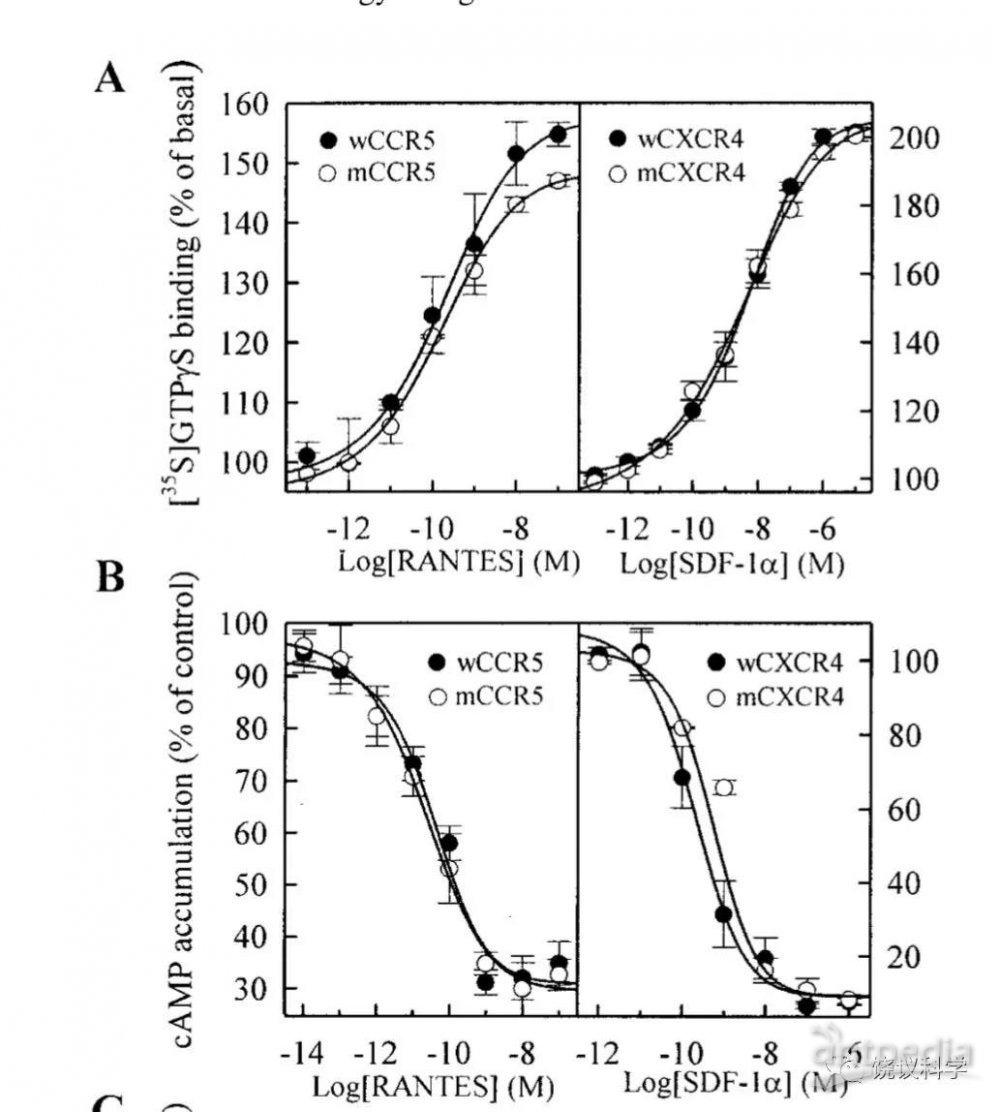
您繼續捍衛凌堃-裴鋼之前,可能還需要仔細讀讀他們的文章。
7)現在的事實是,如果您的大作有如您來信那樣信誓旦旦的確信和自豪,那么凌堃-裴鋼的結果就已被您判刑:不可重復。
但是,我們大家應該不能簡單輕信您,而立即貶低凌堃-裴鋼。
我們現在只能說:不清楚您和凌堃-裴鋼,誰更可信?
顯然,這里的分析顯示您對科學結果的分析不嚴謹(居然沒有比較兩篇文章中配體的濃度,沒有看凌堃-裴鋼圖3A和B所示漂亮而完美的曲線)。
您信口開河抨擊我,如果這是誠實的榜樣,就會奇怪了。
所以,我們還不能依靠您提供的資料和言論來斷定凌堃-裴鋼不可信。
8)您的來信口口聲聲“Our data, and the work of others, directly support the conclusion by Ling et al in their 1999 PNAS paper. In fact, our work was carried out on the identical protein from totally different perspectives.”(翻譯為“我們的資料、以及其他人的工作,直接支持凌等1999年文章的結論。事實上,我們的工作從不同的角度研究了同樣的蛋白質”)。
事實上,您的工作從來沒有用與凌堃-裴鋼所用的“同樣的蛋白質”(“identical protein”,這里英文應該復數,順便糾正一下):您的SZ190b和SZ158a,不是凌堃-裴鋼用的缺72個氨基酸的蛋白質(凌堃-裴鋼的CCR5缺亮氨酸37至甘氨酸107;CXCR4缺異亮氨酸43至纈氨酸114)。
我比較寬容,不說您說用“同樣的蛋白質”是信口開河、更不說您撒謊,而只說您不嚴謹。
大作的結果證明凌堃-裴鋼的結果不可能出現,而您來信卻說它直接證明了凌堃-裴鋼的結果。這至少是夸大,肯定不止不嚴謹。
問問你們MIT其他教授,什么是重復,達到什么程度才是嚴格?不同的基因片段、編碼蛋白質有不同,是嚴格重復嗎?我實驗室做過完全一樣的重復,但限于利益沖突而不能高呼,只能在您逼迫下說說,這就叫嚴謹。不妨問問你們MIT認識我的諾獎得主或著名教授,我是否嚴謹。
8)與其糾結張曙光可信、還是裴鋼可信,應該由第三方做嚴謹的實驗。
用凌堃-裴鋼一模一樣的DNA構建、產生一模一樣的五重跨膜蛋白,然后做檢驗。先可以檢驗鈣內流,因為檢測鈣內流的方法簡單。凌堃-裴鋼還作了其他好幾個實驗(我經常忘記確切的到底是幾個),張博士也不妨先重復。
您如果有了與凌堃-裴鋼完全一樣的constructs,也歡迎寄給我實驗室。
我們還需要中國科學院道德建設委員會找到合適的第三方,有公信力的第三方。
可惜您不是,您的言行讓您喪失了作為有公信力的第三方,也許是暫時喪失,但您已經不能作為被科學院邀請的第三方,只能作為裴鋼一方。如果裴鋼認為您是我這方派去黑他的,我堅決否認,我迄今也沒有見過您,聯系也是第一次,何況還是您來噴我。那您只能作為無公信力的第三方。
(遙祝您今后通過嚴謹的科學、慎重的言行,早日恢復公信力。例如,您的功能實驗還做的不足夠多,結論可能還需要慎重又慎重。)
9)您還提到了其他文章,它們沒有一篇重復了凌堃-裴鋼的結果。
您寄來幾篇假基因的文章,只能說明有些基因被表達了,不證明有功能。很多與我們討論的GPCR毫無關系。
您提供的參考文獻有些明確指出GPCR少于七重跨膜無傳遞信號作用(如您提供的Zhu X and Wess J (1998) Biochemistry 37:15773-15784; Trettel et al. (2003) Journal of Biological Chemistry 278:40980-8. doi: 10.1074/jbc.M306815200)。您以后應該有選擇,就不要堆砌這種支持七重跨膜重要性、不支持非七重跨膜蛋白有信號功能的文章。
Helen Wise于2012年發表的綜述,明確絕大多數非GPCRs都沒有轉導信號的功能,而且常常相反,不僅不能轉導信號、還能抑制信號轉導。極少數缺乏七重跨膜的GPCR有信號的結果的文章有兩個共性:一般只有一篇文章,而且來自一個實驗室,同一個實驗室沒有兩篇、不同實驗室也沒有互相驗證過。所以,這些極少有信號的文章,都缺乏公認。
事實上,您轉來的一大批給您的祝賀信,全部認為您2020年大作的發現令人驚訝。這種驚訝也就證明GPCR領域認為七重跨膜是共識。謝謝您進一步提供證據支持我多次說過的共識。
您的大作是否改變共識,我們拭目以待。正如凌堃-裴鋼的文章沒有改變共識,大作也需要經過時間考驗、需要經過其他實驗室驗證。
10)在您這份郵件之前,我平生只在2004年左右收到過一封這樣口氣的郵件。因為我反對美國神經科學會邀請達賴喇嘛做演講,美國科學家有多種看法,有一位白人教授就是您這樣的口氣,批我是中國政府的走狗。我與您素不相識,您居然說我的動機 not honorable,我就不起訴您了。希望裴鋼以我為榜樣,不因為您高級黑他而起訴您。
希望您經此事件,不要對人直接頤指氣使,或至少堂堂正正。例如,前些天貴校陳剛教授受不公平對待,我立即寫了一封信,那種口氣,不如您現在對我的口氣。但愿您不是那種在外國人面前唯唯諾諾、在中國人面前頤指氣使的人。MIT的教授告訴我,他們在為督促MIT校長支持陳剛而集體簽名。我們《知識分子》微信公眾號最近刊登了這封信,您是否簽名?如果還沒有簽,可以趕緊找人簽。
您如果愿意遵循MIT教授的常規,先就粗魯的郵件向我道歉,特別是honorable一詞,我也不拒絕接受,如果您的誠懇的道歉。
以后,我們共同等待有公信力的第三方,如果它能夠重復凌堃-裴鋼關鍵結果,那時就該我公開向裴鋼道歉。如果它也不能重復凌堃-裴鋼,您就要再度公開道歉,而裴鋼不僅應該用中文道歉,也應該英文致信《美國科學院院刊》撤稿并道歉。中文的道歉,如果寄給《知識分子》或者《賽先生》,估計都會歡迎,讀者會很多(抱歉----這是插播廣告)。
饒毅
2021年1月23日下午6點
順便提到:您的大作,可能研究質量和水平有限,需要加強。派學生來我實驗室做GPCR的功能方面,可能有助于您實驗室進步,在功能檢測方面進步。
一位美國名牌大學教授對大作的評論:
把兩篇文章看了一下,如果沒有理解錯的話:凌-裴文章里,突變的蛋白(5個跨膜區)功能正常,與完整蛋白(7個跨膜區)幾乎一樣。張的文章里,突變的蛋白能結合配體,但一些檢測里,結合率(Kd)不到正常蛋白的10%,而且能阻斷正常蛋白的功能。大部分科學家會把這個結果解釋成突變蛋白沒有正常功能。不知道張為什么認為他的文章驗證了凌-裴的結果(應該是相反)。去掉不同跨膜區有如此大的差別,是很有趣的結果,更說明需要重復同樣的實驗
一位中國研究生對大作的評論:
張曙光老師發表的iScience我細看了一下,張老師和裴老師的文章在實驗結果細節上其實是相互矛盾的。比如:
(1)iScience中,FigureS4B,雖然文章聲稱,"all receptors exhibited preferential localization on cell membranes",但是Figure4B truncated CCR5明顯信號駐留在胞漿中,不在膜上,這說明敲除兩跨膜區后,上膜明顯受影響。這一點與裴老師Figure2C矛盾。
(2)iScience中,Figure 5A,B,D,E,鈣成像實驗,他們的實驗不能說刺激出來了鈣信號,A,D兩圖WT full length receptor的熒光曲線error bar太大了(他們這里故意把error bar變成灰白色,細看會發現bar很大,難有統計學意義的),他們實驗陽性對照就不明顯(文中鈣成像用酶標板做的,他們需要進一步學習怎么做鈣成像)。即便如此,Figure 5 B, E truncated receptor的鈣信號也明顯降低,Figure 5E甚至可以說truncated receptor鈣信號消失,這更不支持裴老師PNAS Figure 3D。
發件人: Shuguang Zhang
日期: Friday, January 22, 2021 at 11:58 AM
至: Transmissome
抄送: "oy@itp.ac.cn"
主題: A letter to Dr. Rao Yi concerning your extremely careless accusation of Dr. 裴鋼 and colleagues' 1999 PNAS paper without familiarity with the literature
Dr. Rao Yi,
I take liberty to write you a rebuttal letter concerning your extremely careless accusation of Dr. 裴鋼 and colleagues' 1999 PNAS paper without familiarity with the literature.
I am greatly alarmed by your critical accusation of Dr. 裴鋼 and his colleagues’ 1999 publication in PNAS without carefully reading the scientific literature. Your accusation is not only incorrect, but the motivation for making such an accusation without proof cannot be honorably explained or justified, especially you are an UCSF and Harvard-trainedscientist.In support of Dr. 裴鋼’s scientific results, I refer you to my laboratory’s work of several years. Our results are reported in “Non-full-length Water-Soluble CXCR4QTY and CCR5QTY Chemokine Receptors: Implication for Overlooked Truncated but Functional Membrane Receptors” in iScience, Cell Press in 2020. Our paper not only confirms the work carried out by Ling et al., “Five-transmembrane domains appear sufficient for a G protein-coupled receptor: Functional five-transmembrane domain chemokine receptors” PNAS 1999, but we also show unequivocally that CXCR4 and CCR5 with only 2 or 3 transmembrane segments demonstrate ligand binding both in vitro, and located on cell plasma membrane, and carried out cell signaling. Our data, and the work of others, directly support the conclusion by Ling et al in their 1999 PNAS paper. In fact, our work was carried out on the identical protein from totally different perspectives. It appears you are also unaware of the comprehensive review of Dr. Helen Wise, “The roles played by highly truncated splice variants of G protein-coupled receptors” J. Mol. Signal., 7, 13 (2012). In this review paper, Dr. Wise listed many such truncated but functional receptors. It is surprising you would launch such a serious accusation without at least reading the literature.
Your accusation without familiarity with the literature is totally irresponsible, both scientifically and ethically. As an UCSF and Harvard-trained scientist, faculty member at Washington University and Northwestern University, you certainly understand that any allegation or accusation must be based on valid scientific evidence. It is reckless and extremely damaging to the scientific reputation and career of those being accused, especially to younger scientists.
I believe your accusation is entirely without merit, and that you must sincerely and openly apologize to Dr. 裴鋼 and his colleagues.
I fully support efforts to root out actual scientific misconduct at every level in China both students and academicians. Documented misconduct is extremely damaging to China’s scientific reputation and standing in the world. However, all allegations and accusations must be based on facts.
Please see my rebuttal letter to put the matter in a new light.
Please see our recent publication, MIT News other people’s comments:
Qing, R., Tao, F., Han, Q., Chung, H., Ni, J., Suter, B., Kubicek, J., Maertens, B., Schubert, T. & Zhang, S. (2020) Non-full-length water-soluble CXCR4QTY, CCR5QTY chemokine receptors and implication for overlooked truncated membrane receptors iScience, Cell Press. DOI:https://doi.org/10.1016/j.isci.2020.101670
MIT News: Truncated immune system receptors may regulate cellular activity
Here is the review by Dr. Helen Wise in 2012.
Shuguang
"If you ask big questions, you get big answers"
Francis Crick
Shuguang Zhang, Ph.D.
Laboratory of Molecular Architecture
Media Lab,
Massachusetts Institute of Technology
20 Ames Street, Wiesner Media Lab Building
E15-391 (Office), E15-015 (Lab)
Cambridge, MA 02139-4307, USA
Tel: +1-617-258-7514, FAX: +1-617-253-7035
E-mail: shuguang@mit.edu
Website: https://www.media.mit.edu/people/
https://www.moleculararchitecture.org
Google Scholar: Shuguang Zhang
ORCID: 0000-0002-3856-3752
據首都醫科大學微信公眾號消息,日前,首都醫科大學召開教師干部大會,宣布校長調整,吉訓明任首都醫科大學黨委副書記、校長;饒毅因年齡原因,不再擔任首都醫科大學校長職務。首都教育微信公眾號顯示,吉訓明出生于......
近日,首都醫科大學校長饒毅在公眾號發文指出中國科學院神經科學研究所存在“任人唯親、近親繁殖”問題,再次揭露學術界的陰暗面。饒毅一直敢于正視學術腐敗,多次指出選拔使用不當等弊端。此舉令人欽佩,也顯示學術......
5月31日,中國科學院、中國工程院院士增選工作啟動。當天,首都醫科大學校長饒毅的個人微信公眾號“饒議科學”發布《院士選舉改革的第一步:收到賄賂上交》一文,引起社會廣泛關注。“饒議科學”該文稱:“中國科......
2023年4月9日,首都醫學科學創新中心微信公眾號平臺正式上線運營。首都醫學科學創新中心由首都醫科大學校長、北京大學講席教授饒毅和知名神經生物學家梅林教授創建,是北京市政府批準成立的具有獨立法人資格的......
嬰兒的母系依戀關系是哺乳動物的首要社會行為。嬰兒依戀行為的分子機制尚不清楚。2023年3月2日,首都醫科大學饒毅及劉琰共同通訊在Neuron在線發表題為“Molecularandcellularmec......
【本文發表于2019年英文《內分泌與代謝趨勢》雜志,評論迄今廣為流傳的有關腎上腺素的科學史錯誤】本文指出生物醫學史上有三個錯誤與腎上腺素有關:一是誤認為第一個激素是胰泌素,二是誤認為化學分離純化腎上腺......
2023年1月9日,蘇州工業園區重大科技領軍企業蘇州華毅樂健生物科技有限公司蘇州GMP基地正式開業!園區黨工委委員、管委會副主任倪乾,園區科協主席、科創委副主任、科技招商中心主任肖詩滔,華毅樂健科學創......
因為多種原因,今天,是否接種疫苗,是否接種國產疫苗,都成為了問題。反對接種疫苗的原因,包括:1)在西方一直有人反對強制接種疫苗,認為需要留有個人選擇的自由。但是,西方各國政府普遍強制接種是保護人民所必......
Svante P??bo被同事扔水里,以慶祝他10月3日獲得諾貝爾生理學或醫學獎。我也試試扔他到水里----冷靜分析他獲獎是否最公平。至少從1990年代我已經注意P??bo的研究,而《知識分......
全民接種疫苗后,如果疫苗高效而全民被保護,這是疫苗免疫,因為是每個人或絕大多數都接種疫苗,這是個體免疫的效果,不是群體免疫。群體免疫是指一部分人接種而獲得免疫力之后,其他人不接種疫苗,但因為接種的人形......